
While engineering and technological breakthroughs continue to advance carbon capture, utilisation and storage (CCUS), its widespread deployment will ultimately depend on more than technological progress. Securing public support, building trust and establishing a social licence to operate are equally essential to the successful delivery of CCUS projects.
The panel discussion “Beyond the Tech: Earning Public Trust and Social Licence for CCUS” at the 2026 World CCUS Conference, chaired by Raffaella Ocone (Heriot-Watt University), shifted the focus from subsurface operations and technical infrastructure to the communities, stakeholders and wider societal considerations that shape the acceptance of CCUS projects.
Bringing together experts and policymakers, the session explored the key barriers and opportunities associated with CCUS deployment, highlighting the importance of public engagement, transparency, local benefits and effective collaboration.
Gregory Symons (Scottish Government) presented the findings of the recently published report Public Perceptions of Carbon Capture and Storage, commissioned by ClimateXChange, Scotland’s centre of expertise on climate change research. He shared key findings and lessons on strengthening public acceptance, emphasising the importance of demonstrating tangible benefits for local communities and building trust through meaningful and transparent engagement.
Hannah Galbraith-Olive (Global CCS Institute) highlighted the growing number of operational projects worldwide and their contribution to achieving net-zero ambitions. She also reflected on developments and experiences in other countries, including Denmark, where extensive stakeholder engagement is underway in preparation for onshore CO2 storage. Her contribution highlighted the importance of balancing climate ambitions with industrial competitiveness, particularly for countries whose industries are significantly exposed to international trade and the implications of the EU Carbon Border Adjustment Mechanism (CBAM).
Eva Halland (CarbonGEO) shared insights from Norway, drawing on the country’s experience in CO2 storage and her work leading the development of the Norwegian CO2 Storage Atlas and contributing to the regulatory framework for offshore storage. She highlighted how knowledge-sharing, transparency and demonstrating storage safety can help address public concerns and build confidence in CCUS, emphasising the importance of combining technical expertise with stakeholder engagement.
Nihal Darraj (Imperial College London) explored the fundamental roles of researchers, professional bodies, policymakers and governments in fostering public understanding and securing social acceptance of CCUS. The discussion underlined the need for coordinated efforts across these groups to build confidence and create the conditions for successful project development.
A clear consensus emerged: the social licence to operate must be considered alongside planning permission, regulatory requirements and technical feasibility. It is not an additional consideration, but a fundamental condition for the successful and sustainable deployment of CCUS.
Building trust, ensuring transparency and demonstrating tangible benefits for local communities are central to achieving public acceptance. The discussion also highlighted the importance of closer collaboration between scientists, engineers and social scientists, ensuring that technological innovation is accompanied by a deeper understanding of societal concerns, expectations and priorities.
Ultimately, the successful deployment of CCUS will depend not only on whether the technology works, but also on whether the communities and societies in which it is implemented understand, trust and support it.
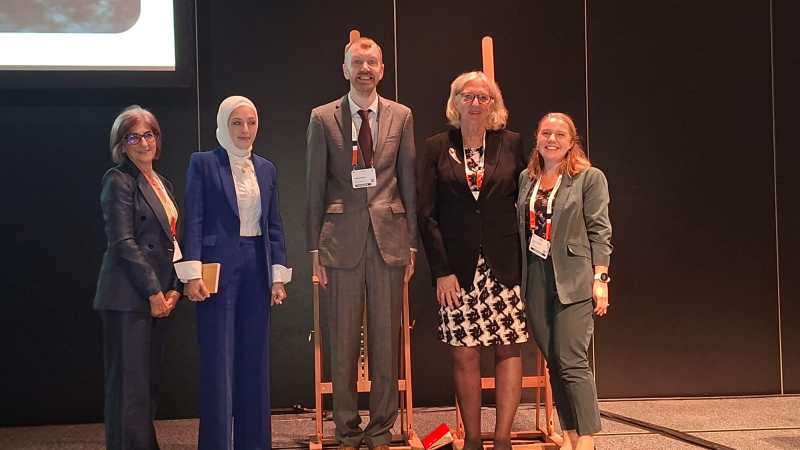
In the photo: (L-R) Raffaella Ocone, Nihal Darraj, Gregory Symons, Eva Halland and Hannah Galbraith-Olive