The World CCUS Conference offers one-day short courses by carefully selected renowned instructors, aimed at providing professionals and academics with key knowledge relevant to current developments in the field.
Last seats available — receive 50% off your booking with discount code WCCUSUK50. Secure your place and take advantage of this special offer.

Short Course 1
CO2 Storage Project Design and Optimization (Saline Aquifers)
Short Course 2
Fundamentals of Gas Injection Processes: CO2 Injection/Sequestration, HC Injection and Miscibility (MMP/MME)
Short Course 3
Rock physics & quantitative seismic interpretation for a CO2 storage site characterization and monitoring
Short Course 4
Simple Models for Screening, Pressure Management, Risk Assessment, Optimisation and Beyond in Geological CO2 Storage Project Development
| Instructor: | Prof. Philip Ringrose (Norwegian University of Science & Technology, Norway) |
| Language: | English |
| Level: | Intermediate |
| Duration and format: | Classroom, 1 day |
| Location: | International Conference & Exhibition Centre | EICC |
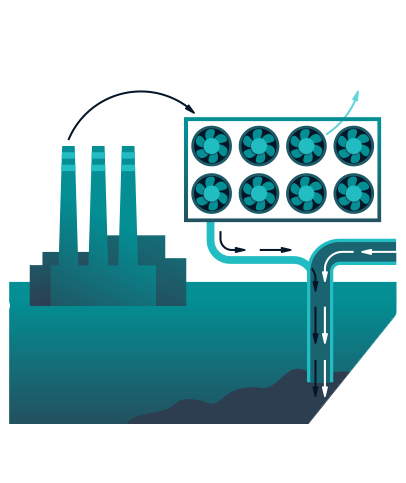
The course will explain the overall design of CO2 storage projects, focusing on sandstone (siliciclastic) saline aquifer systems, and covering:

Philip Ringrose is Professor in Energy Transition Geoscience at NTNU, based at the Centre for Geophysics Forecasting. He is also Honorary Professor (2018–2024) in Sustainable Geoenergy at the University of Edinburgh, School of Geosciences. He was previously at Equinor, where he worked on various developments in CCS and on several large-scale CO2 storage projects. His many years of industry and research experience, include positions as Lead Geologist and Advisor for Geological Reservoir Modelling (at Statoil). Between 1990 and 1997, he was a Lecturer and Research Fellow at the Heriot-Watt Institute of Petroleum Engineering, Edinburgh, UK.
He has published widely on reservoir geoscience and flow in rock media and has recently published textbooks on ‘Reservoir Model Design’ (2021) together with Mark Bentley and ‘How to Store CO2 Underground’ (2020). He has been honoured with several awards, including the 2023 SINTEF-NTNU CCS Award, the EAGE 2022 Norman Falcon Award (with others), the 2021 Energy Group Medal from the Geological Society of London, and the EAGE 2018 Louis Cagniard Award (with Dr Nazarian). He is a member of The Royal Norwegian Society of Sciences and Letters (DKNVS) and the Norwegian Academy of Technological Sciences (NTVA).
| Instructor: | Birol Dindoruk (Texas A&M University) |
| Language: | English |
| Level: | Introductory to Intermediate |
| Duration and format: | Classroom, 1 day |
| Location: | TBD |
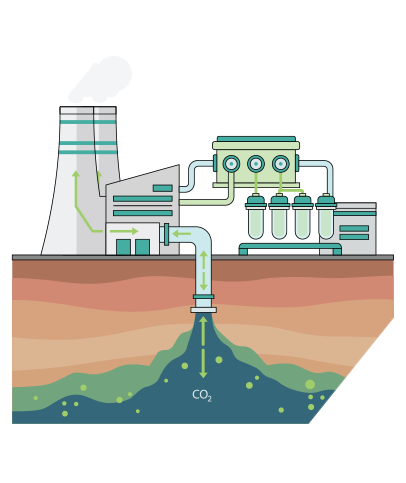
Concept of gas injection and what miscibility means and not.
Gas flooding involves many aspects of engineering, from surface facilities to production engineering to reservoir engineering. There are also newer theories and their applications, especially in the context of miscibility development and assessment as summarized by Dindoruk et al. Some of the renewed momentum in gas flooding also comes from the potential for subsurface CO2 sequestration and other gases (H2,CH4, etc.) storage to lower the overall footprint of greenhouse gases. More than ever, there is a wider envelope of applications for petroleum engineers that includes coupled CO2 sequestration and geothermal energy production.
This class will focus on the key topics of gas injection processes that cover both EOR and CO2 sequestration aspects, fundamentals, practical measurements and workflows. In the class, we will emphasize use cases and various examples, including experimental processes. As the complexity of in-situ fluids and the reservoir conditions become more challenging, progress in the computational area is also being made. Therefore, complex fluids and their implications in the context of gas injection processes will be inherently part of this class. One of the new topics that we will also introduce is the use of data-centric/machine learning methods to estimate MMP as one of the key parameters of screening/design.
Dr. Birol Dindoruk is currently American Association of Drilling Engineers Endowed Professor of Petroleum Engineering at Texas A&M University, previously he was the Chief Scientist of Reservoir Physics and the Principal Technical Expert of Reservoir Engineering in Shell focusing on areas of Fluid Properties and CO2/Gas Injection Processes.
His technical contributions have been acknowledged with many awards during his career, including SPE Lester C. Uren Award (2014), Cedric K. Ferguson Medal (1994), and Distinguished Membership. In 2017, he was elected as a member of the National Academy of Engineering for his significant theoretical and practical contributions to enhanced oil recovery and CO2 sequestration.
Dindoruk has 28 years of industrial experience, holds a BSc Degree from Technical University of Istanbul in Petroleum Engineering, MSc Degree from The University of Alabama in petroleum engineering and also a PhD from Stanford University in Petroleum Engineering and Mathematics, and an MBA from University of Houston.
| Instructor: | Manzar Fawad (Norwegian Geotechnical Institute) |
| Language: | English |
| Level: | Introductory to Intermediate |
| Duration and format: | Classroom, 1 day |
| Location: | International Conference & Exhibition Centre | EICC |

Session 1: Introduction and Workflow Overview
Session 2: Fundamentals of Rock‑Physics Modelling for CO₂ Storage
Session 3: Quantitative Seismic Interpretation
Session 4: Reservoir Property Cube Generation
Session 5: CO₂ Plume Monitoring and Time‑Lapse Considerations
Session 6: Case studies & Conclusions
Manzar Fawad is a Lead Geophysicist at NGI with 25+ years of experience in hydrocarbon exploration, field development, CO2 storage evaluation, reservoir characterization, and R&D. He has developed innovative methods to quantify reservoir and source rock properties using wireline logs and prestack inverted seismic, as well as advanced approaches for CO2 storage monitoring integrating seismic and electromagnetic data.
He holds a Ph.D. in Sediment Compaction and Rock Physics from the University of Oslo and an M.Sc. in Petroleum Geosciences (Quantitative Seismic) from NTNU.
| Instructors: | Florian Doster & Hariharan Ramachandran (Herriot-Watt University) Iain de Jonge-Andersen (University of Strathclyde) |
| Language: | English |
| Level: | Intermediate |
| Duration and format: | Classroom, 1 day |
| Location: | International Conference & Exhibition Centre | EICC |
The development of a CO2 storage site involves numerous decisions made at different stages of the project, each informed by modelling. In early geological screening, the conventional approach relies on mass‑balance estimates that use a storage‑efficiency factor, a parameter that lumps the many physical processes reducing storage capacity into one number. Later stages typically involve complex reservoir simulations, sometimes incorporating hydrodynamic, geomechanical, chemical, and thermal processes, which can take days to weeks to run on high‑performance computing systems.
This course equips you with simplified models and tools that bridge the gap between these two extremes. You will learn how to assess storage capacity more rigorously than by relying on an arbitrary efficiency factor, without requiring full‑scale reservoir simulations. You will also gain tools to evaluate pressure build‑up, manage basin‑scale behaviour, and address risks and storage limitations, including situations with multiple operators. For experienced reservoir engineers, these models support optimisation and uncertainty quantification, particularly when data availability is limited.

Florian Doster is Professor for Multi-Scale Multi-Phase Flow Modelling at the Institute
of GeoEnergy Engineering at Heriot-Watt University. His research interests include
the study of multi-physics multi-phase flow phenomena in porous media and their
appropriate physical and mathematical description across length and time scales in
the context of geological carbon storage. His research is funded by industry and
research councils. He has delivered specialist short courses on various aspects of
CCS through various formats and has received the Best Instructor 2022 Award from
EAGE for the online course on Geological CO2 Storage.

Iain de Jonge-Anderson is a Research Fellow at the Department of Civil and Environmental Engineering, University of Strathclyde. His research focuses on the geological characterisation of CO2 storage sites, developing rapid assessment tools to understand dynamic injection behaviour, and ensuring these dynamics are incorporated into policy-facing climate models. He received a PhD and MSc from Institute of GeoEnergy Engineering, Heriot-Watt University and a BSc in Geology & Petroleum Geology from University of Aberdeen.
Hariharan Ramachandran is a Research Associate at the Institute of GeoEnergy Engineering, Heriot-Watt University, where he develops rapid simulation models for subsurface energy applications. His research focuses on CO₂ storage capacity assessment, fault and legacy wellbore leakage risk quantification, and uncertainty analysis for field-scale applications.
He received a Ph.D. and MS in Petroleum and Geosystems Engineering from The University of Texas at Austin and a B.Tech in Chemical Engineering from Anna University in Chennai, India.
