
Report from CCUS Norway: Connecting the Dots between CO2 Supply and Storage

Norway knows where its CO2 comes from and where it can be stored. But how do we connect the dots? A new report from CCUS Norway dives into the challenge of transporting CO2 from scattered, small industrial sources to permanent storage sites. CCUS Norway, with support from CLIMIT, has mapped these challenges together with partners […]
TotalEnergies, Mitsui and Nordsøfonden pick up CO2 storage exploration permit in North Sea
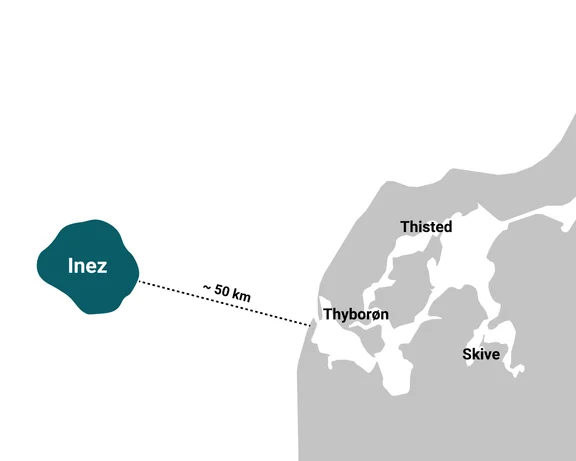
The Danish Energy Agency has granted its eighth permit for the exploration and possible storage of CO2 in Denmark to a consortium consisting of TotalEnergies, Mitsui and Nordsøfonden. The permit covers the coastal Inez area, located around 50 kilometres offshore from Thyborøn, and allows the consortium to carry out exploration activities to determine whether the […]
Flue2Chem recognised as leading Net-Zero project
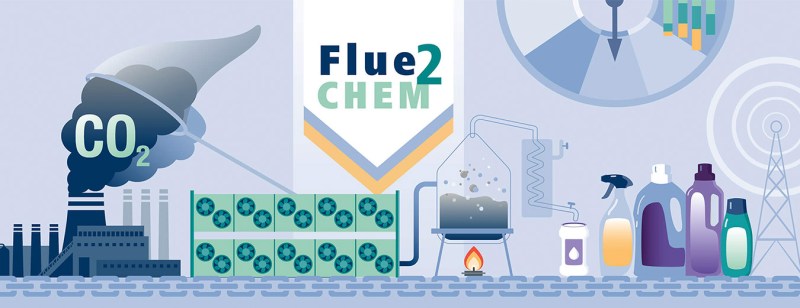
Flue2Chem has been named the UK National Winner of the 2025 Net-Zero Industries Award, announced at COP30 in Brazil, for its work demonstrating the feasibility of a circular carbon supply chain. The judging team recognised the ground-breaking project for its unique industry-to-industry collaborative approach, which assisted the development of new technologies to repurpose CO2 emissions, […]
InCapture and G-15-AP CCS Joint Venture Award Development Concept Engineering Contract to Wood
InCapture Pty Ltd (InCapture), operator of the GHG Assessment Permit G-15-AP, together with Joint Venture Partners SK earthon Australia Pty Ltd (SK earthon) and Carbon CQ Pty Ltd (CarbonCQ), has awarded the Development Concept Engineering phase of the G-15-AP Technical Assessment for Declaration of Storage Formation to Wood, a global leader in consulting and engineering […]
UK launches second carbon storage licensing round for 14 sites

The UK North Sea Transition Authority (NSTA) has on 9 December 2025 opened a carbon storage licensing round offering 14 locations in Scottish and English waters for exploration and appraisal. Application deadline is 24 March 2026, and licences are expected to be awarded in early 2027. The areas fall into two broad categories – depleted […]
Ray (Zhenhua) Rui honoured with SPE Sustainability and Stewardship in the Oil and Gas Industry Award

The World CCUS Conference proudly celebrates board member Professor Zhenhua Rui for receiving the SPE Sustainability and Stewardship in the Oil and Gas Industry Award, recognising his outstanding global leadership in sustainable energy development. Prof Rui is a Distinguished Chair Professor, Associate Dean for Carbon Neutrality Future Technology, and Director of the CCUS Research Institute […]
Global Carbon Capture: How’s it going?

At the 2025 World Carbon Capture Utilisation and Storage (WCCUS) Conference, Professor Philip Ringrose (NTNU/NTVA) shared an honest assessment of the global carbon capture effort — and the verdict was cautiously optimistic. Ringrose noted that global emissions may finally begin to decline in 2026, with China’s clean-energy expansion marking a turning point. While natural systems […]
Northern Lights Field Trip
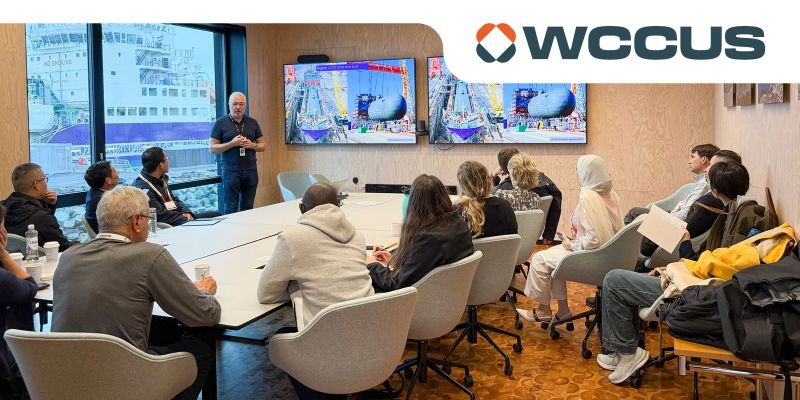
The Northern Lights project is developing an open and flexible infrastructure to transport CO2 from capture sites by ship to a receiving terminal in western Norway for intermediate storage, before being transported by pipeline for safe and permanent storage in a reservoir 2,600 metres under the seabed. The project is widely discussed within the CCUS […]
TGS and Equinor collaborate to drive digital transformation in CCS operations
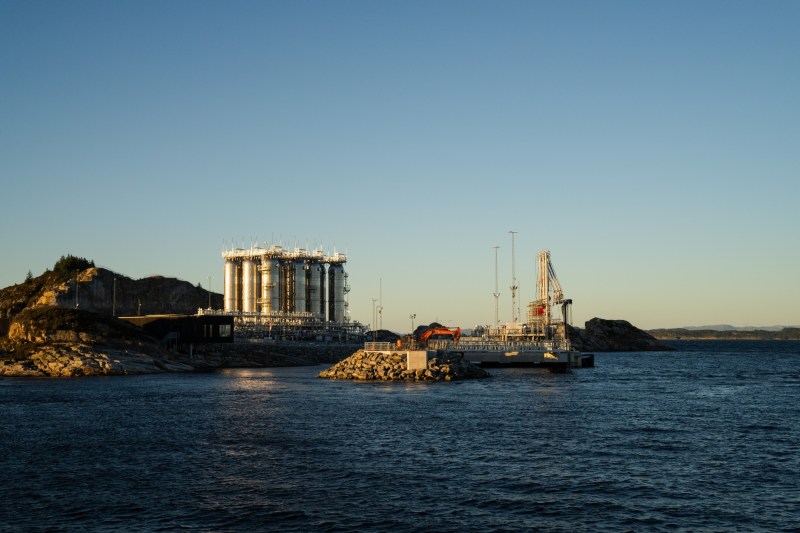
TGS has entered a close collaboration with Equinor, advancing the digitalisation of carbon capture and storage operations. This agreement strengthens TGS’ ongoing cooperation with Equinor by integrating cutting-edge technology to optimise field operations. Northern Lights will integrate TGS’ Prediktor Data Gateway into its digital system to enhance management of the full CO2 value chain, from the […]
Bonaparte CCS project awarded Major Project Status in Australia

The Australian Government has granted Major Project Status to the Bonaparte CCS Project, marking it as the country’s first offshore carbon capture and storage project to achieve this designation. Operated by Inpex subsidiary Inpex Browse E&P (53%), with partners TotalEnergies (26%) and Woodside (21%), the project aims to store over 10 million tonnes of CO2 […]