
Webinar comparing depleted fields and saline aquifers for CO2 storage
As carbon capture and storage (CCS) continues to scale globally, selecting the right geological storage site remains one of the most important decisions in any project. To explore this topic, the EAGE Technical Community on Carbon Capture and Storage recently hosted a webinar “CO2 Storage in Depleted Fields versus Saline Aquifers: The Pros and Cons” […]
North Sea data access boost to support carbon storage research
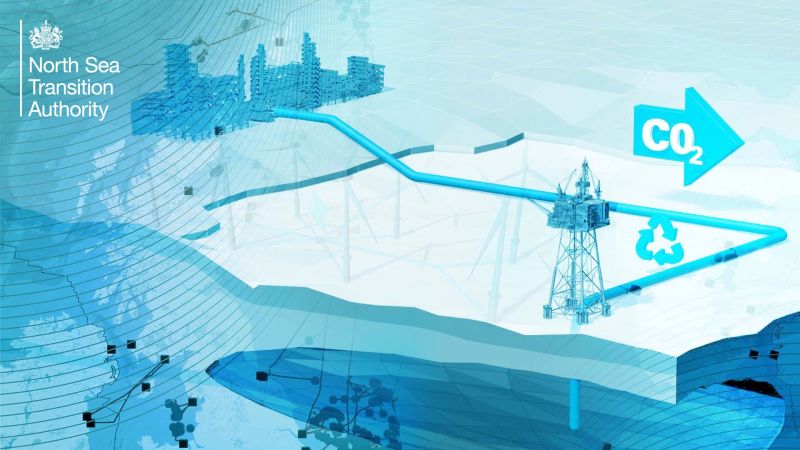
The North Sea Transition Authority (NSTA) has enhanced the National Data Repository to make subsurface and technical information far easier to find and use, with notable benefits for carbon capture and storage research and project planning. The upgrade introduces a free text search function that works in a similar way to a web search engine, allowing […]
Insights from a lecture on ancient rivers and CO2 storage

In an evening lecture hosted by the EAGE London Local Chapter, “From Ancient Rivers to CO2 Storage”, Gary Hampson and Xiang Yan from the Department of Earth Science and Engineering at Imperial College explored how geological and sedimentological studies can inform carbon capture and storage (CCS) projects. Gary Hampson presented “Multiscale Characterization of Sedimentological Heterogeneity […]
DNV’s report sees CCUS as central pillar of Gulf oil and gas decarbonisation
DNV has released its “Oil & Gas Decarbonization in the Gulf Region” report, the second instalment in the company’s Energy Transition Outlook 2026 series on the Middle East. The report positions carbon capture, utilisation and storage (CCUS) as a cornerstone of the Gulf’s strategy to reduce emissions from oil, gas and emerging low-carbon industries, while […]
Global Carbon Capture: How’s it going?

At the 2025 World Carbon Capture Utilisation and Storage (WCCUS) Conference, Professor Philip Ringrose (NTNU/NTVA) shared an honest assessment of the global carbon capture effort — and the verdict was cautiously optimistic. Ringrose noted that global emissions may finally begin to decline in 2026, with China’s clean-energy expansion marking a turning point. While natural systems […]
Northern Lights Field Trip
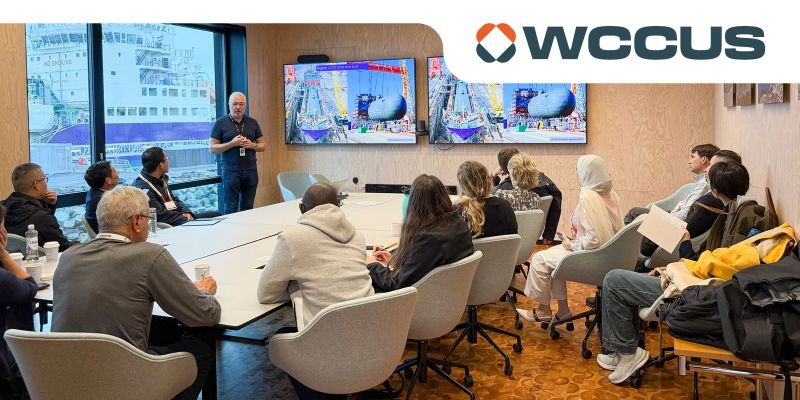
The Northern Lights project is developing an open and flexible infrastructure to transport CO2 from capture sites by ship to a receiving terminal in western Norway for intermediate storage, before being transported by pipeline for safe and permanent storage in a reservoir 2,600 metres under the seabed. The project is widely discussed within the CCUS […]
CCUS in action: Insights from four real-world case studies
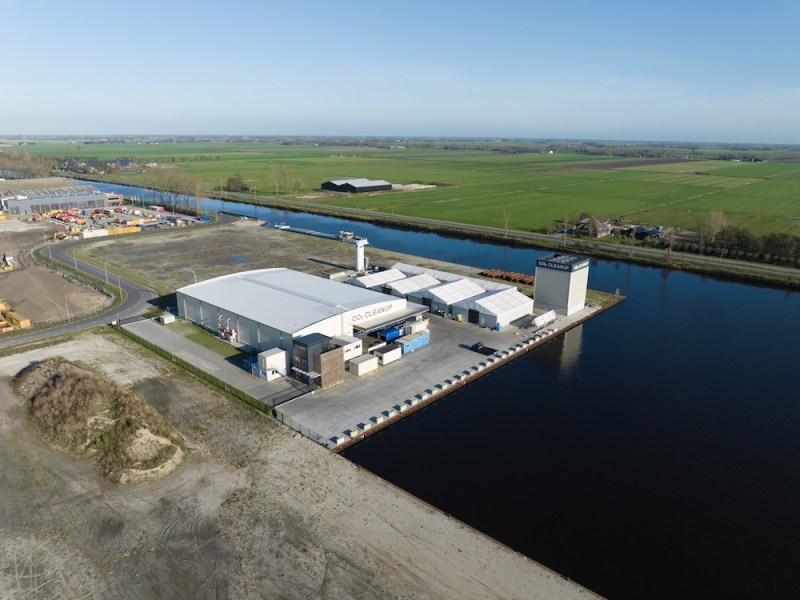
Technical progress in CCUS is moving fast, and so is the complexity of real-world implementation. These four presentations from the EAGE’s E-Lectures library showcase practical solutions to key challenges in CO2 storage site characterisation, monitoring, and full-chain CCS development. Each case offers field-tested methods that can inform and enhance your own project work, whether in […]