
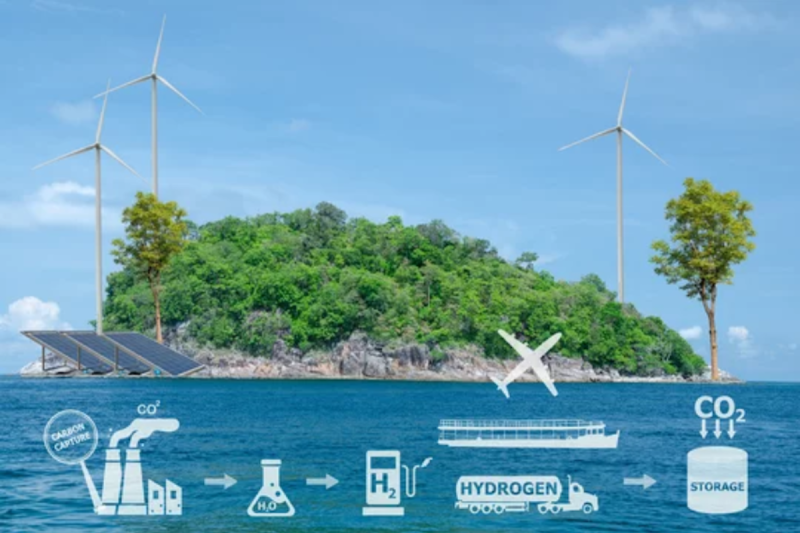
The UK’s new regulations for CCUS and offshore hydrogen production came into force on 6 April 2026. The changes expand existing offshore safety frameworks and provide clearer rules for these emerging low-carbon sectors.
The measures are set out in two legal instruments: the Carbon Capture Utilisation and Storage and Offshore Hydrogen Production (Miscellaneous Amendments) Regulations 2026 and the Health and Safety at Work etc. Act 1974 (Application Outside Great Britain) (Variation) Order 2026. Together, they bring CCUS operations, CO2 pipelines and offshore hydrogen production under established offshore safety regimes.
Key updates include:
- Offshore hydrogen production is now covered by offshore safety frameworks, including rules for design, construction and operation.
- CO2 pipelines used in CCUS are classified as major accident hazard pipelines and must comply with Pipeline Safety Regulations.
- Existing offshore safety regimes such as fire and explosion prevention, design standards, management rules and safety case requirements now explicitly apply to CCUS and hydrogen installations.
- Incident reporting requirements have been clarified under RIDDOR, particularly for well operators.
Operators and duty holders must:
- Treat CCUS and offshore hydrogen production as regulated offshore activities.
- Prepare safety cases, submit notifications and maintain emergency response plans.
- Ensure pipeline integrity, safe operation and emergency preparedness.
- Report incidents involving wells, CCUS or hydrogen operations.
- Comply with general health and safety law to protect workers and the public.
The regulations also confirm that CO2 storage remains offshore under existing licensing frameworks. Overall, the reforms aim to reduce regulatory uncertainty and support investment, contributing to the UK’s target of storing 10 MtCO2 per year by 2030.
For further details and guidance, visit the Health and Safety Executive website.