
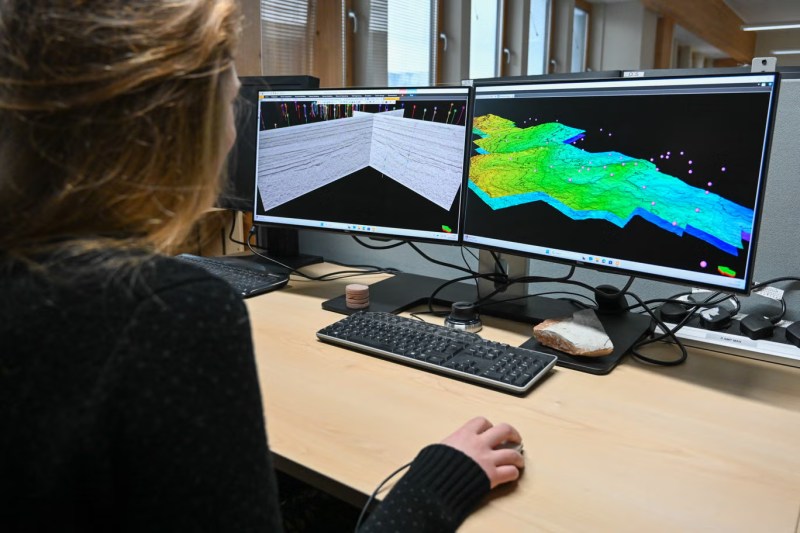
A new British Geological Survey (BGS) report suggests that sandstone formations beneath the Central North Sea could be critical to expanding the UK’s carbon capture and storage (CCS) capacity. The Central North Sea accounts for around 60% of the UK’s total theoretical carbon storage capacity, yet of the licenced storage capacity currently offered, less than 5% is located there, highlighting untapped potential in the region.
Multiple sequences of stacked Palaeogene sandstone units in this area represent a vast CO2 storage resource, with more than 10 billion tonnes of theoretical capacity identified. This is equivalent to a substantial portion of the nation’s long-term storage needs.
BGS geologists are working to better characterise these deep sandstone formations, addressing key questions such as geological connectivity, the integrity of sealing layers, and how pressure effects might influence injection strategies. The work could unlock one of the UK’s largest yet least-developed carbon storage resources and support the Government’s estimated £21.7 billion investment in CCS projects. It underpins efforts to meet the UK’s net-zero goals and ambitions to store up to 170 million tonnes of CO2 per year by 2050.
However, the complexity of these sandstone bodies raises important geological questions that must be resolved before large-scale storage can proceed.
BGS is seeking to establish partnerships to help unlock this nationally significant CO2 storage resource, which could play a crucial role in the UK’s transition to a low-carbon future. Interested parties should contact John Williams, senior geoscientist at BGS.
Photo courtesy of BGS
