
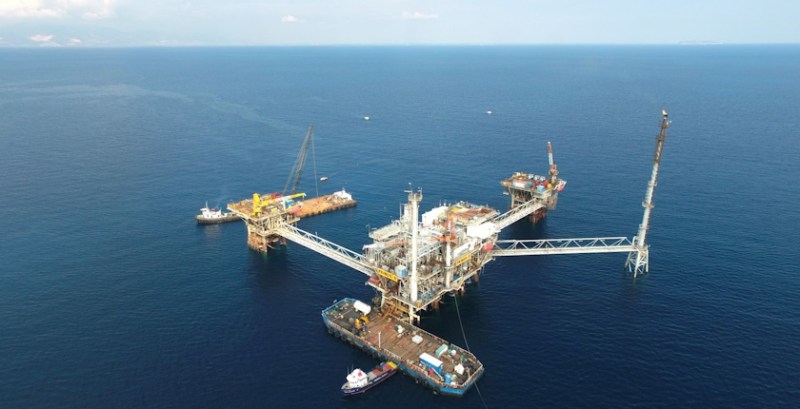
Greece has reached a defining moment in its energy transition with the licensing of the Prinos CO2 storage project, placing the country as the third in the EU (after the Netherlands and Denmark) with approved geological carbon storage sites. Located in the Kavala Gulf in the northeastern Aegean Sea, the project repurposes a depleted offshore oil field into a long-term carbon storage facility, marking a shift from hydrocarbon production to emissions mitigation.
The storage permit was granted in February 2026 by the Hellenic Hydrocarbons and Energy Resources Management Company (HEREMA), Greece’s national licensing authority for geological CO2 storage, confirming the site’s suitability for long-term carbon storage. The permit was issued to EnEarth Greece, a subsidiary of Energean, which is responsible for developing and operating the project. The 25-year licence follows a multi-year technical and regulatory evaluation that began with an exploration permit in October 2022. The project has also received an Environmental Permit from Greece’s Ministry of Environment and Energy, completing the key regulatory approvals required at this stage.
At its core, the project addresses emissions from hard-to-abate sectors such as cement, refining and chemicals, where electrification alone is insufficient. By injecting captured CO2 approximately three kilometres beneath the seabed into the depleted reservoir and underlying deep saline formation, the facility offers a scalable solution aligned with both Greek and European climate targets.
In its first phase, Prinos will have an operational injection capacity of up to 1 MtCO2 per year. A second phase aims to increase capacity to approximately 2.8 MtCO2 per year. In the longer term, contingent storage resources are estimated at up to 66 MtCO2 by 2050, reflecting the broader storage potential of the site.
Commercial interest is already significant. 15 Memoranda of Understanding signed with industrial partners correspond to a total of 6.12 MtCO2 per year of potential storage commitments, underscoring strong regional demand and positioning Prinos as a key storage hub for Southeast Europe.
The project is supported by substantial European funding. Around €270 million in EU grants has been allocated, including approximately €150 million in State aid under the Recovery and Resilience Facility and €120 million from the Connecting Europe Facility. In parallel, around €680 million in EU funding has been awarded to four carbon capture projects in the region under the EU Innovation Fund, representing a combined capture capacity of 3.3 MtCO2 per year. These upstream investments are expected to supply captured CO2 to storage sites, including Prinos. The total investment in the project exceeds €1 billion, reflecting the full capital expenditure required to implement this innovative technology.
Prinos has been included in the Union list of Projects of Common Interest (PCIs), reinforcing its strategic significance within Europe’s cross-border energy and climate infrastructure. Its design envisages transport of liquefied CO2 by ship to an onshore terminal near Kavala, followed by offshore conditioning and injection, enabling flexible and scalable regional CO2 management.
European institutions have played a central role in advancing the project. The European Commission’s Directorate-General for Climate Action issued a positive opinion on the storage development plan early in 2026, confirming that it meets EU requirements for safe and permanent containment of CO2. While this opinion is non-binding, it was a key step in the regulatory process leading up to the storage permit.
From a policy perspective, the licensing marks the completion of the main regulatory phase under both Greek and European frameworks. HEREMA described the decision as a landmark step for a project of national and European strategic importance, reinforcing Greece’s commitment to carbon capture and storage as part of its broader climate strategy.
For industry, the implications are significant. As emissions regulations tighten across Europe, access to reliable CO2 storage is becoming essential for maintaining competitiveness. By establishing one of the first permitted storage sites in the Mediterranean and among the few in the EU, Greece is positioning itself as a regional hub for carbon management infrastructure.
The Prinos CO2 project also reflects a broader transformation in the energy sector through the repurposing of legacy hydrocarbon assets for low-carbon applications. Discovered in 1974 and long associated with oil and gas production, the Prinos field is now being reimagined as part of Europe’s decarbonised future.
The project is further strengthened by its connection to European research and innovation initiatives. It is linked to the HERCCULES Project, which aims to accelerate the deployment of carbon capture, utilisation, and storage (CCUS) in Mediterranean Europe, and the COREu Project, a large-scale collaboration involving more than 40 partners focused on developing cross-border CO2 transport and storage networks. These initiatives support the creation of regional CCUS clusters and the integration of infrastructure across Europe, which are essential for achieving net-zero greenhouse gas emissions by 2050.
While final operational approvals covering monitoring, safety, and risk management plans are still required before injection begins, the granting of the storage and environmental permits marks a decisive step forward, signaling a transition from planning to execution for the Prinos facility and for Greece’s participation in broader European carbon management efforts.
The Prinos CO2 Storage Project is now the first licensed CO2 storage site in Southern Europe. Its licensing and ongoing development demonstrate how a legacy hydrocarbon field can be repurposed for industrial-scale carbon capture and storage, providing infrastructure that will support regional emissions mitigation once operational.
Photo courtesy of EnEarth